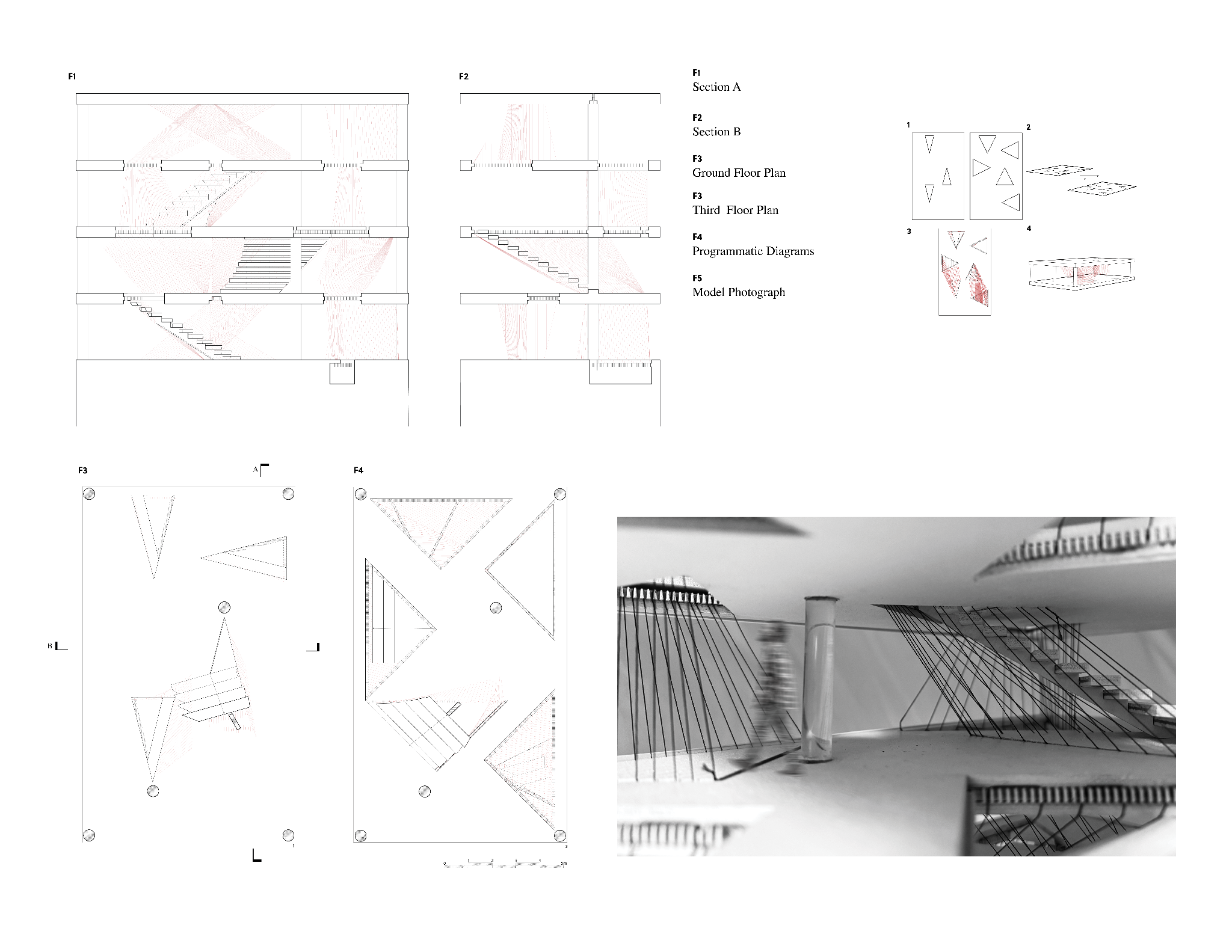
Creation of spatial continuity through permeability and tensile force.
Architecture Portfolio 2025
Selected Works
Creation of spatial continuity through permeability and tensile force.
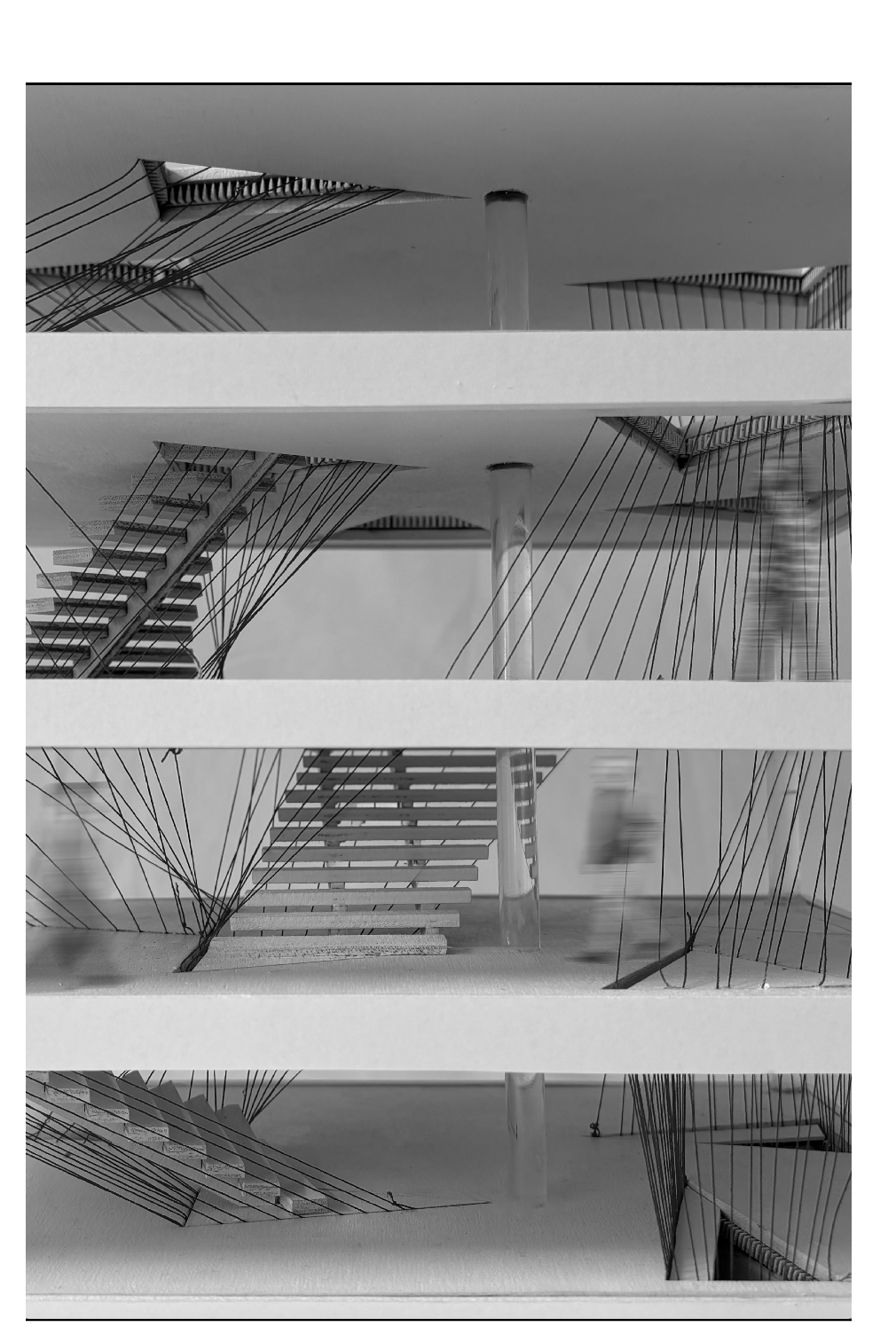
The project embraces permeability as its central philosophy, treating spatial joining as both a physical and conceptual gesture. Instead of rigid separations, the design uses threaded partitions and translucent acrylic columns to create soft, continuous boundaries. Inspired by the idea of the “glass cage,” the architecture resists full enclosure — prioritizing openness, visibility, and the connection or “joining” of spaces. The result is a fluid environment where movement and interaction unfold across loosely defined spaces.
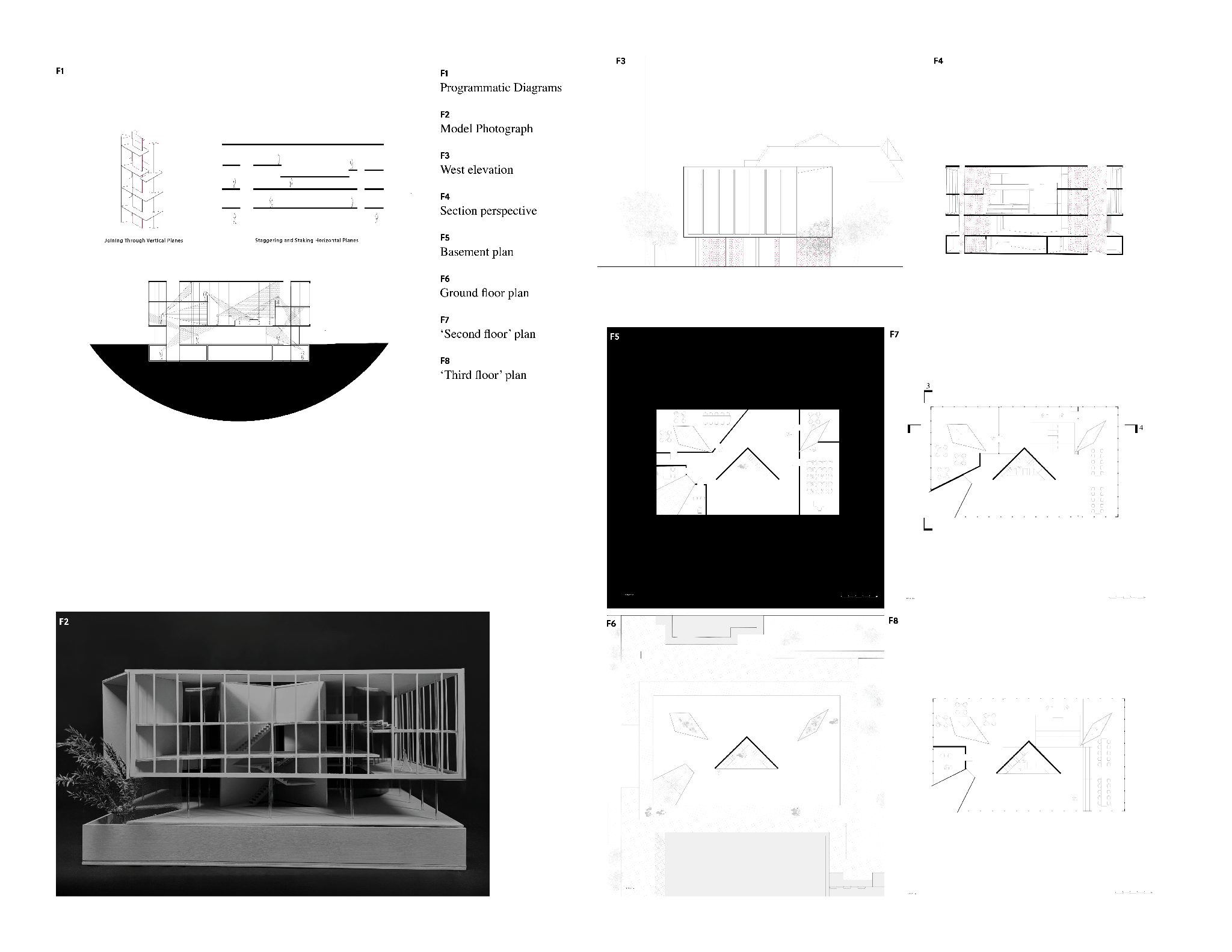
Seamless joining of spaces to foster continuity, openness, and spatial fluidity.
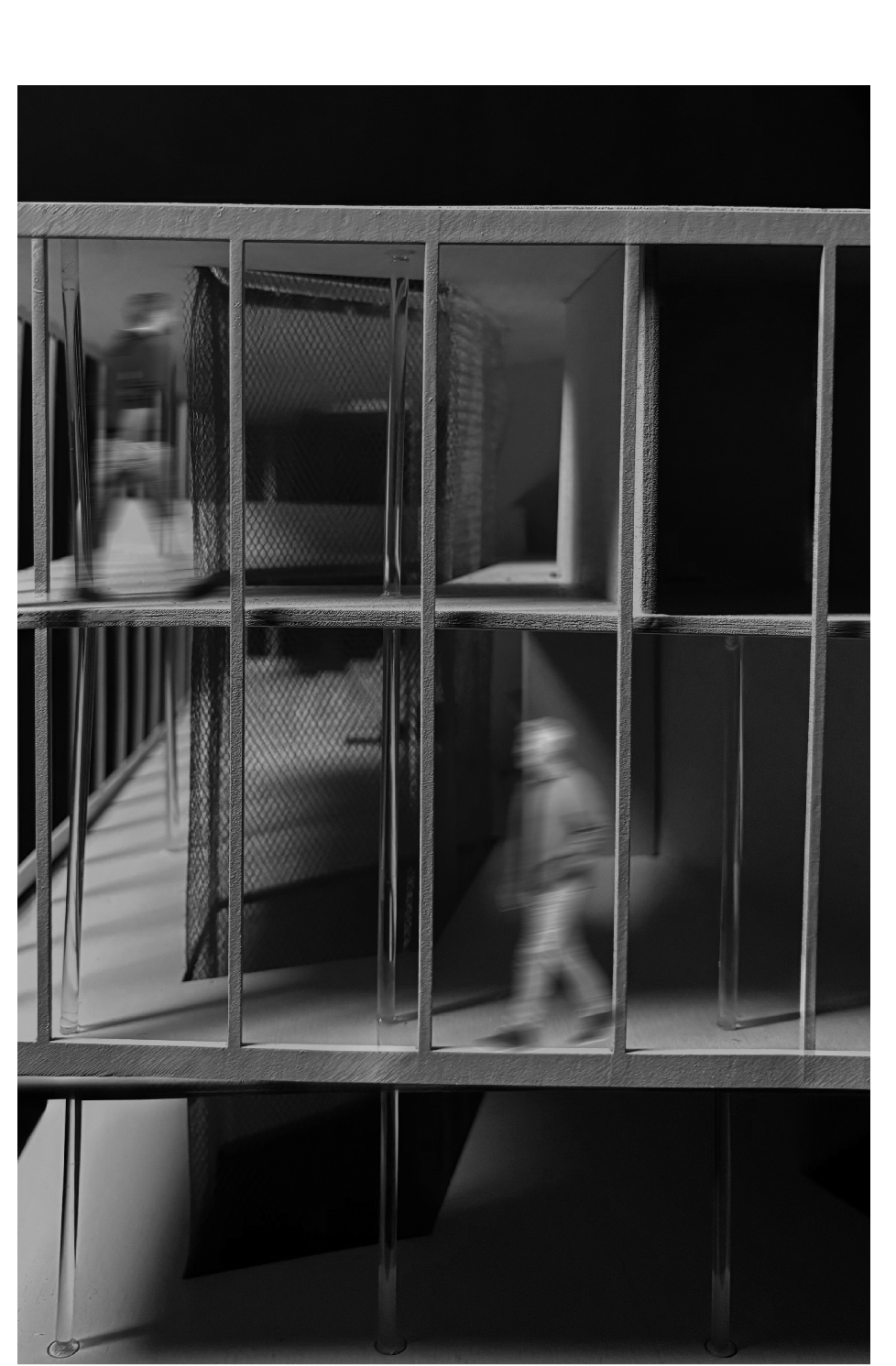
The project explores the concept of “joining” as a central theme, emphasizing the fusion of spaces to create a fluid, uninterrupted sequence of environments. The design prioritizes long horizontal and vertical continuities, where massing is carefully orchestrated to foster a sense of openness and connection. Through thoughtful integration of spaces, the architecture invites a spatial experience that is both expansive and cohesive, encouraging movement and interaction within a unified whole. The use of form and geometry allows for an evolving connection between areas, promoting a dynamic and immersive experience.
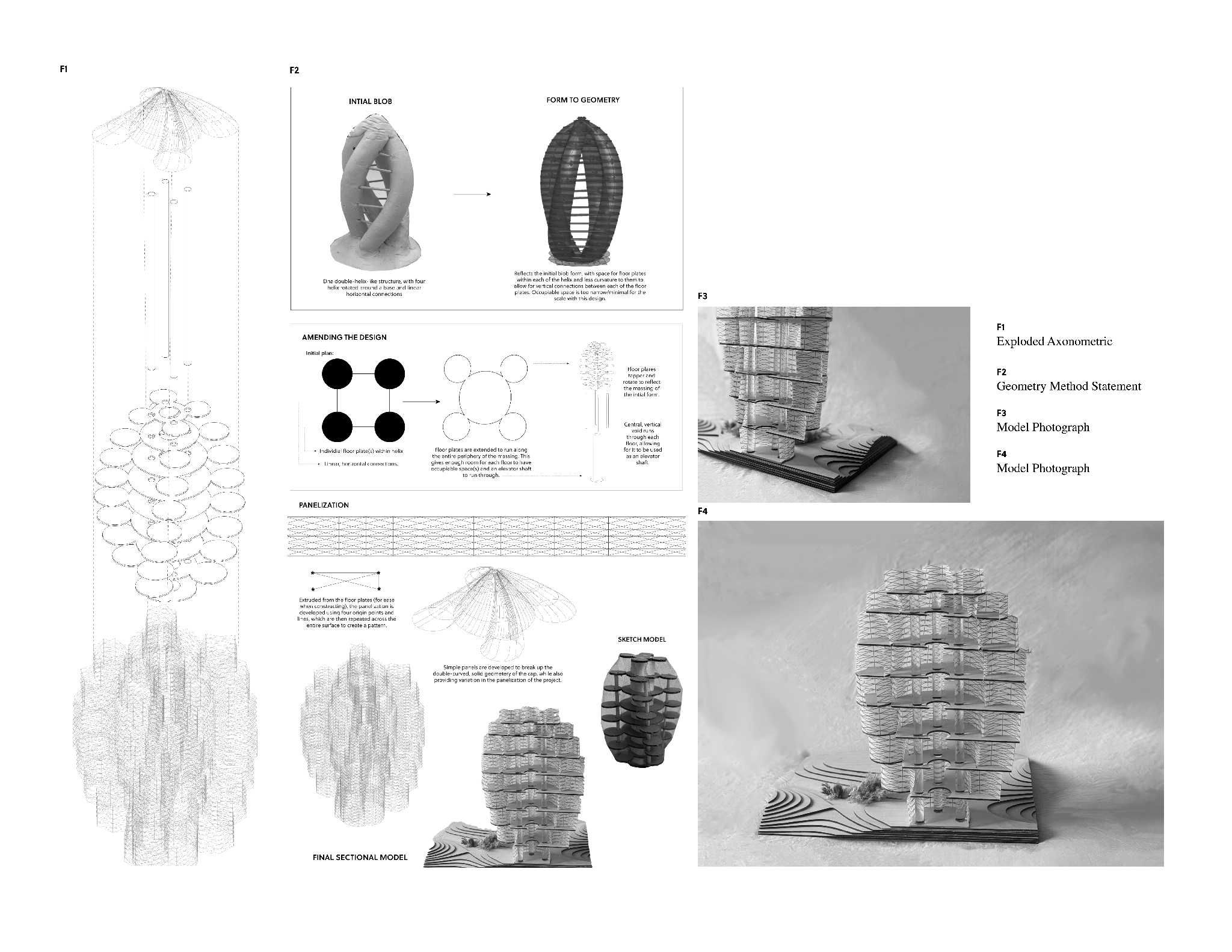
Parametric transformation of an organic form into a structured, inhabitable system.
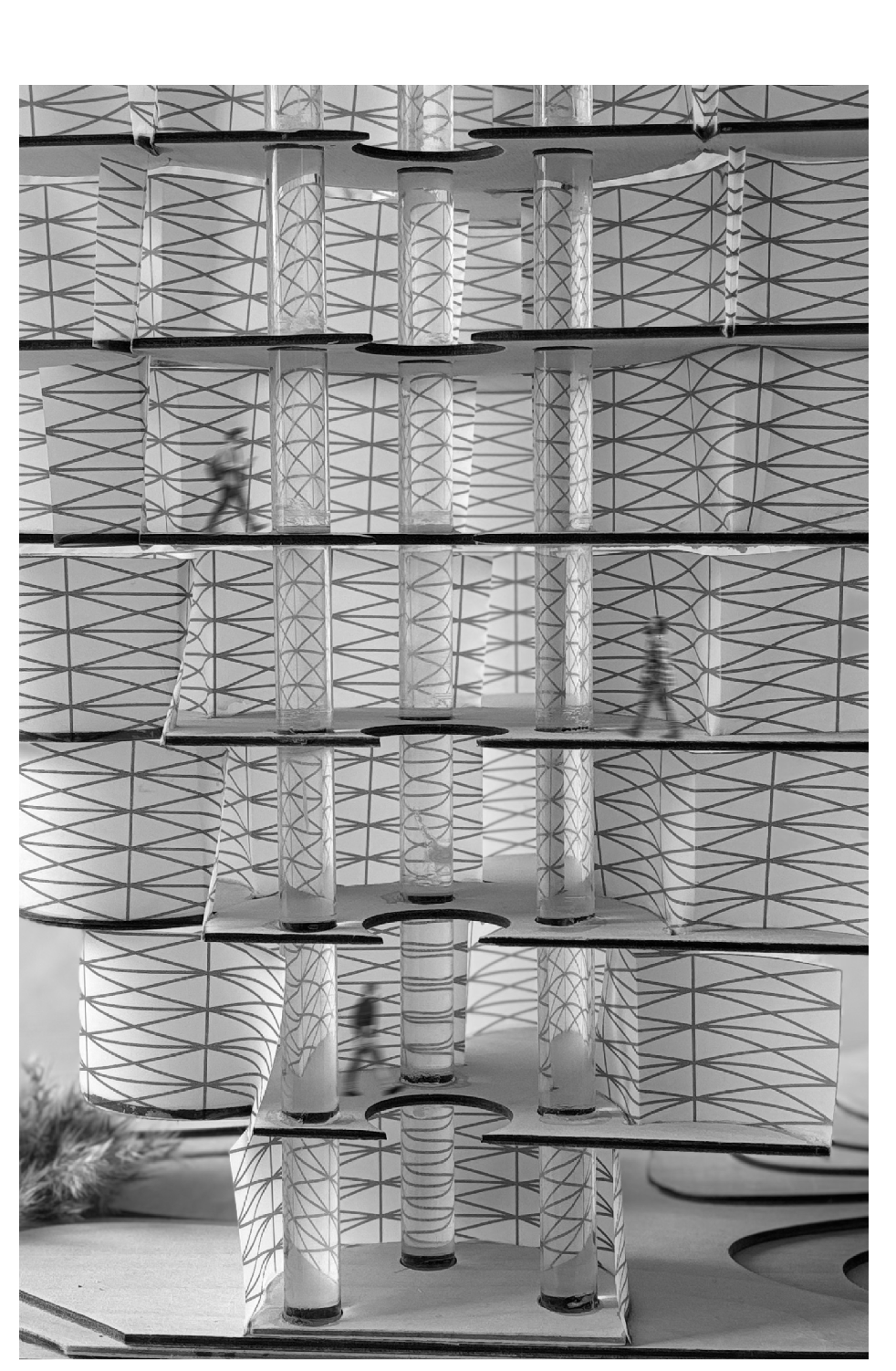
This project explores the idea of continuity through transformation, using parametric logic to transform an initial form into a coherent, inhabitable geometry. What begins as a double-belt “blob” is refined into a structured system. Floor plates extend radially, providing occupiable zones while maintaining a central void for circulation and light. Through panelization and subdivision, the outer facade takes on a minimal yet, layered, adaptive texture, balancing structural rhythm with spatial openness. The final form maintains the double-curved nature of the original mass while revealing an organized, legible architectural language.
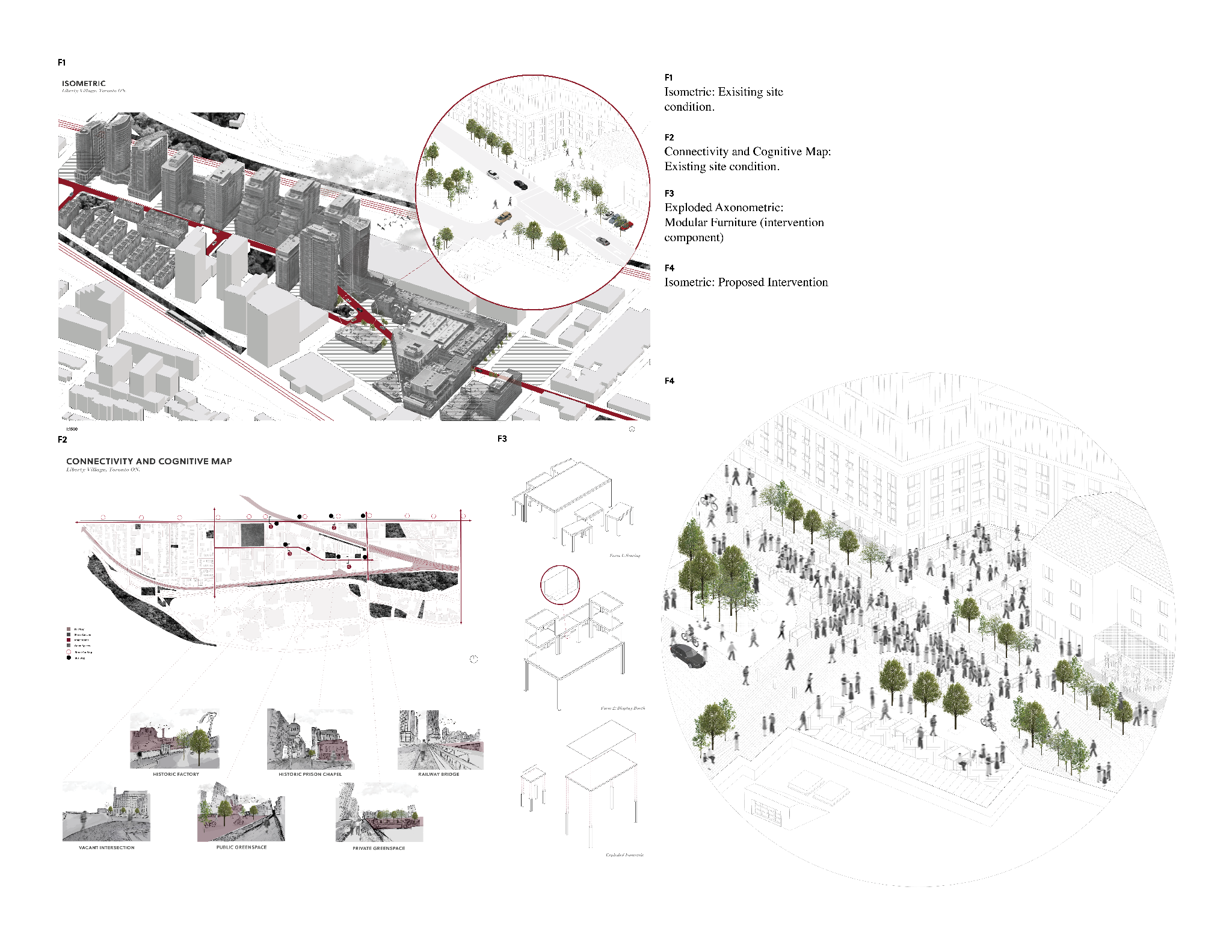
Domesticating the Street: Memory, Transition, and Urban Livability
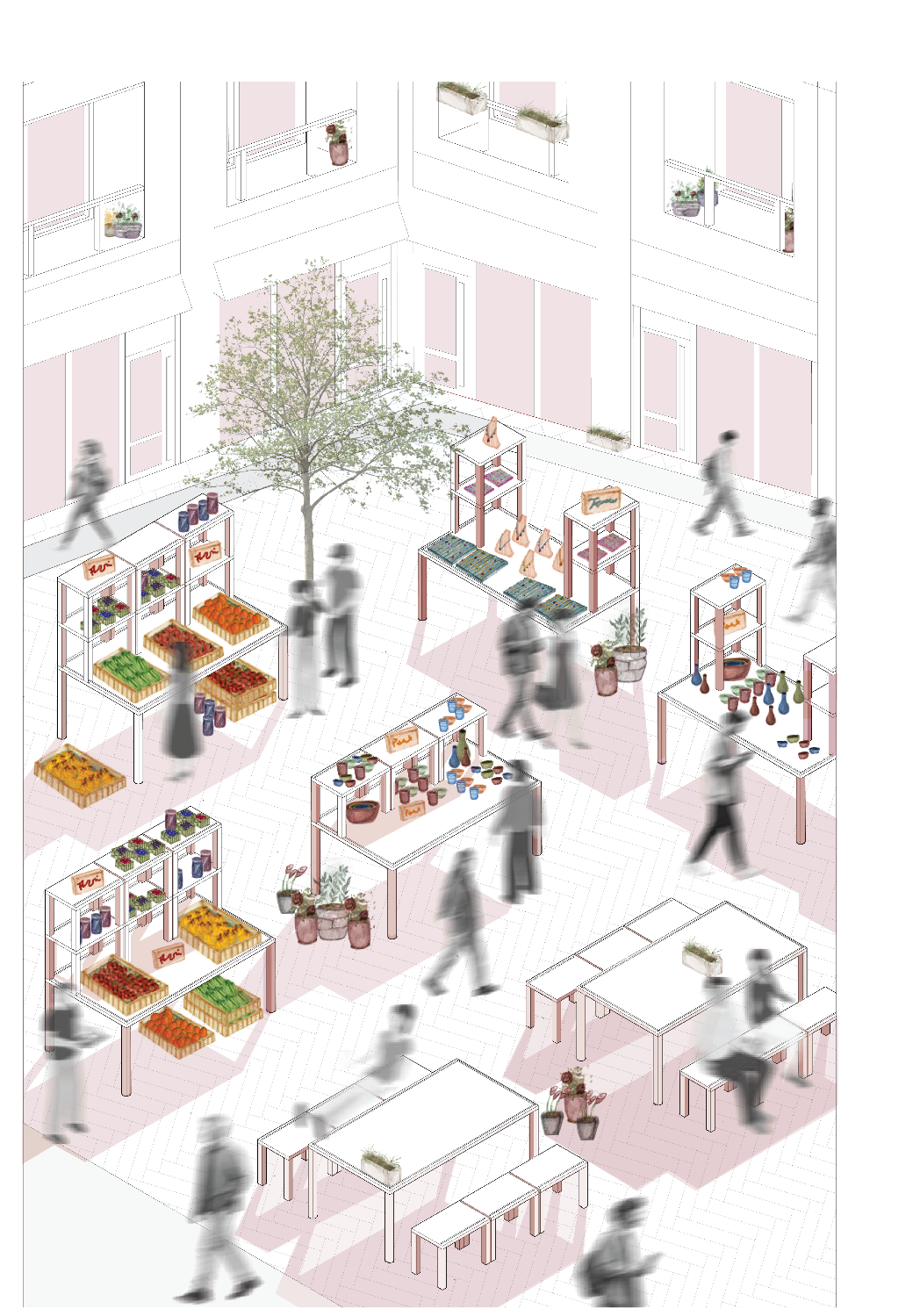
This intervention responds to the site’s isolation and shifting character, where residential and commercial zones meet and the urban scale changes dramatically. Informed by the area’s history and uneven development, the design reimagines the street as a shared, domestic space. Drawing on the woonerf model and local precedents of informal street appropriation, we introduced modular furniture and paving that echoes the site’s historic architectural language. The goal was to invite everyday use — gardening, gathering, resting — blurring the boundaries between public and private space to support memory, livability, and the evolving identity of the neighborhood.
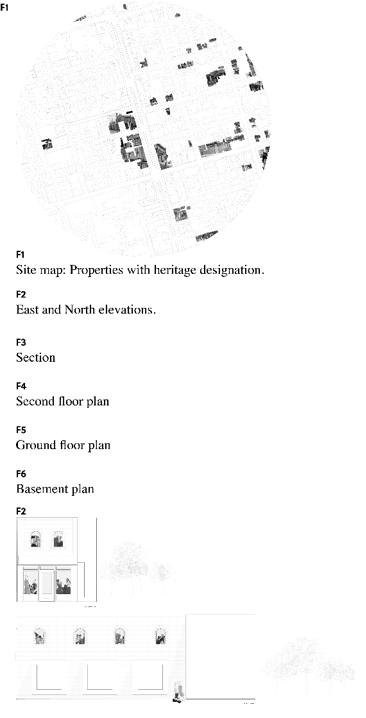
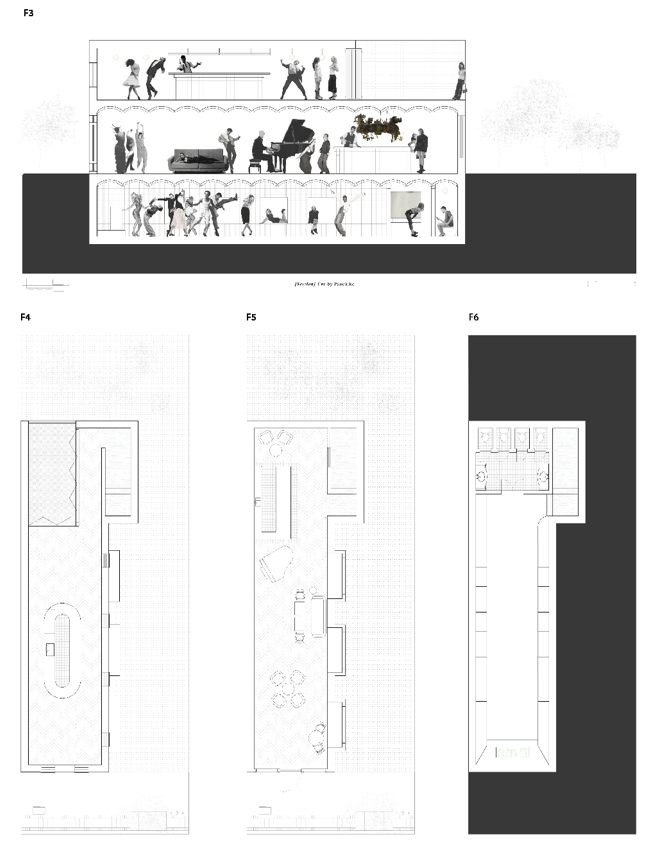
This project explores spatial memory through subtle interventions in a vacant Chinatown building. Inspired by the layered histories of the site, the design introduces mirrored additions that reflect both the existing architecture and the evolving identity of the neighbourhood. Like memory itself — formed through new experiences that reshape old ones — these elements remain distinct yet in dialogue with the original structure. Inside, a listening space unfolds across three floors, shifting from open lounges above to a compressed, club-like basement, emphasizing how spatial atmosphere shapes and responds to memory and use.
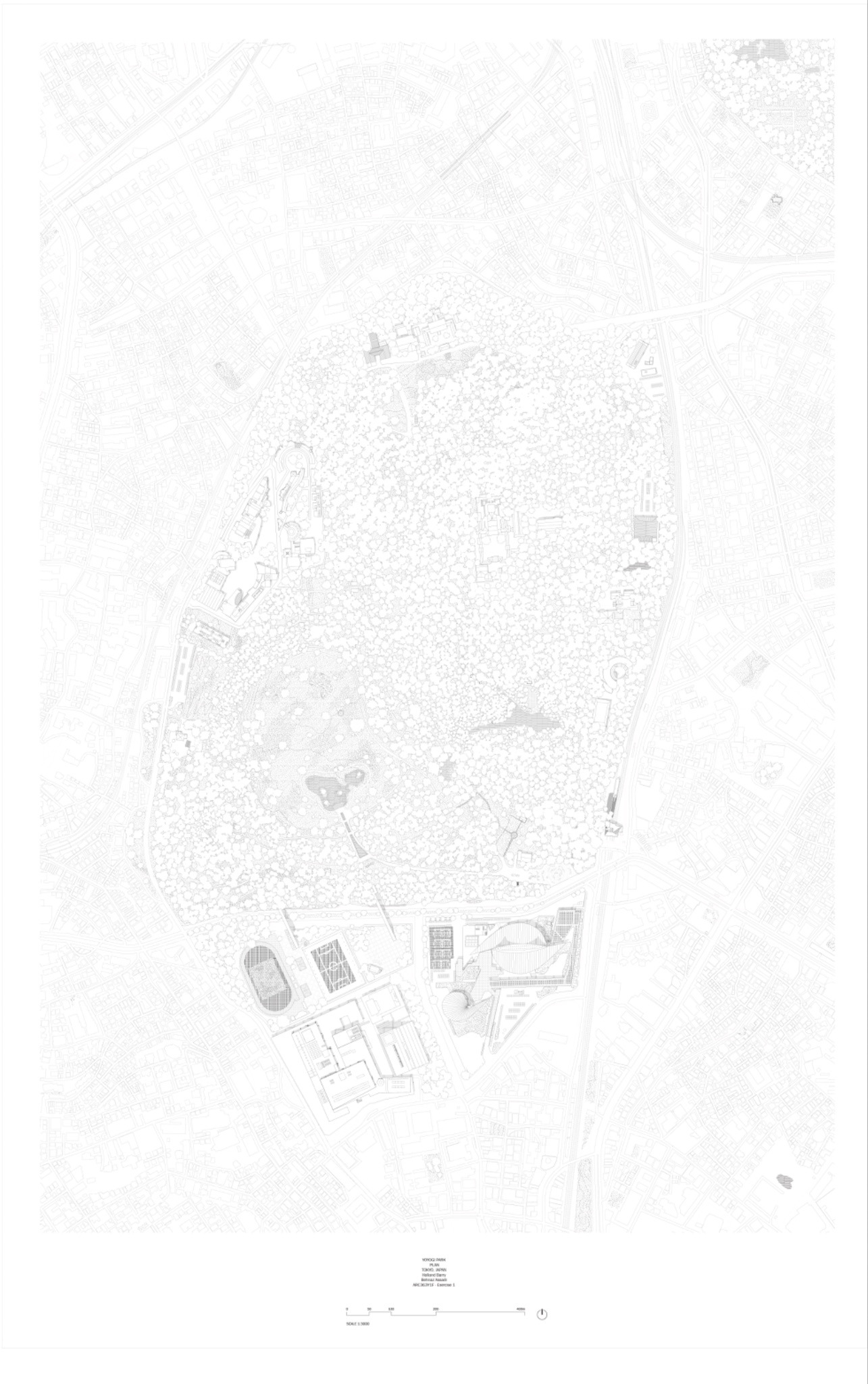


Architecture student at the John H. Daniels Faculty of Architecture, Landscape and Design, University of Toronto. Focused on the intersection of landscape, material systems, and spatial experience.